From Clicks to Conversations: Why Messaging Funnels are Replacing Landing Pages in 2026
Shanaz Khan Khongthaw | Product Marketing Manager
For more than a decade, digital marketing operated on a simple script – run an ad, users click on it, land on a page, and convert or drop off. Landing pages became the focal points of every campaign – whether it was lead generation, product discovery or purchase journeys. And for a long time, this worked. Traffic was relatively cheaper, attention spans were higher, and smartphones were relatively new.
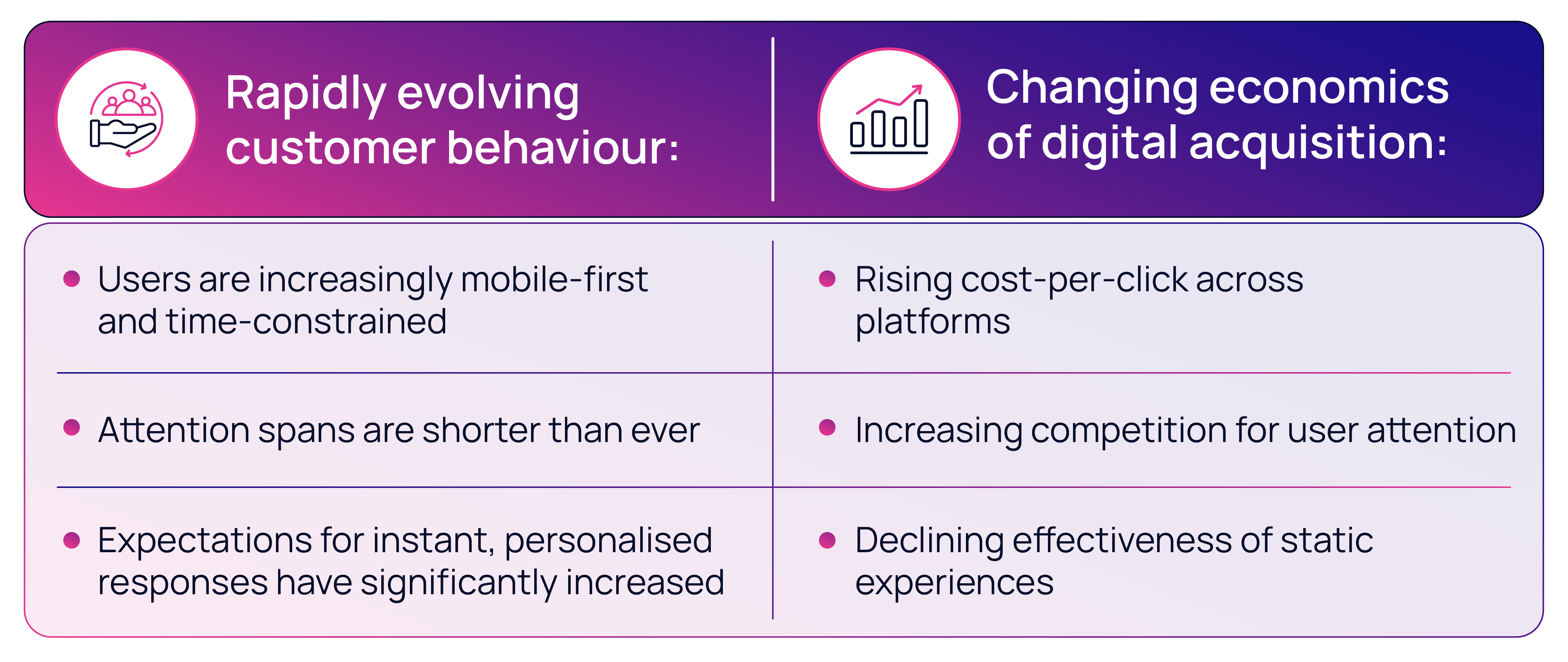
The landing page model, however, has started to lose its effectiveness due to two major shifts:
As smartphones became the device users spent most of their time on, brands tried to bridge the gap with mobile apps. But these apps came with their own limitations – high CAC, low installs, and the necessity to constantly maintain and upgrade them.
However, in all of these shifts, one thing remained constant. Brands were still expecting customers to come to them rather than meeting the customers where they already were. The result is a widening gap between intent and action.
But it’s not 2016 anymore. The future of customer experience is not in generic messaging, friction-laden redirections and tedious downloads. It is in contextual, hyper-personalised conversations. And marketers who are still betting heavily on landing pages are playing this game with obsolete rules.
This is where Messaging Funnels – the third and most drastic shift in customer experience – come in!
What are messaging funnels? How are they different from web-based landing page journeys? Why are landing pages becoming ineffective?
Find the answers to these and many related questions about messaging funnels in this blog. But before that, it is important to understand why landing pages don’t work as they did a decade ago.
Let’s dive in!
Why Landing Page-Led Campaigns are Losing Effectiveness
The case against landing pages is built upon key customer behaviour and industry trends. It isn’t about aesthetics, technology or medium. The ineffectiveness is caused by the inherent mismatch between what today’s customers expect their online behaviour and the campaigns that brands deliver. Here are the key reasons impacting landing page conversions in 2026:
Friction-laden experience: 82.9% of landing page traffic comes from mobile. However, most landing pages are designed for desktop with long copy, heavy images, multiple navigation steps, complex forms and more. All of these increase page load time and frustrate the customer.
Even when the pages are mobile-first, multiple steps mean multiple exit opportunities. At a time when customers make decisions with a tap or swipe, these friction areas can turn fatal for your conversions.
Short attention span: The average attention span has shrunk to 7.97 seconds, and screen focus duration has been reduced to a mere 43 seconds. What this means for brands is that the attention window they must make an impression good enough for users to click through and to prove their value has significantly collapsed.
Additionally, with the average consumer being served 4000+ ads per day, the task of grabbing attention and retaining it has become more difficult than ever. Add to the mix a journey that’s rife with friction, and you’re only burning money on ad spend.
Lack of real-time, dynamic personalisation: Landing pages can be personalised at a segment level but not adapt dynamically based on the user journey. While they can be personalised quite well according to segments (geography, devices, traffic source, etc.),landing page personalisation is rule-based and pre-configured. It cannot give dynamic responses or adapt to how specific individuals navigate it or what they look for. It delivers a static experience that lacks context, feels generic and impersonal. It fails to deliver what today’s consumers expect –
Limited AI-application: Landing pages are cosmetic AI-compatible – not structural AI. It can personalise a headline or a CTA, but the experience remains largely static. The kind of AI application that moves the needle – LLMs, intent detection, real-time recommendation engines, etc. – requires a dynamic, two-way interface to function.
A landing page is a monologue; AI needs a dialogue.
Low engagement: A landing page is a one-to-many mode of communication. It shares information, reinforces it with available social proof, and hopes the user will perform the desired action. This one-way, passive engagement does not work in today’s world. Consumers want to ask questions, they want instant answers to the questions they ask, explore options, feel heard and seen, and so on. And when brands fail to deliver on these expectations, consumers immediately stop engaging with the page and drop off.
The result: low engagement, high drop-off, low conversions.
High cost, low returns: Brands flooding the digital space with ads have only made acquisition more expensive. Especially at a time when consumers have a thousand options to choose from at their fingertips. In India, as digital ad spends continue to grow ~17–20% YoY, brands are facing rising acquisition costs driven by increased competition, higher bidding intensity and growing demand for performance marketing. But conversion from landing pages is an average of 6.6%.
This means that brands are spending more today than they did a decade ago to acquire traffic that drops off without taking the desired action. The result: high investment, low returns.
Messaging Funnels – The Modern-Day Alternative to Landing Pages
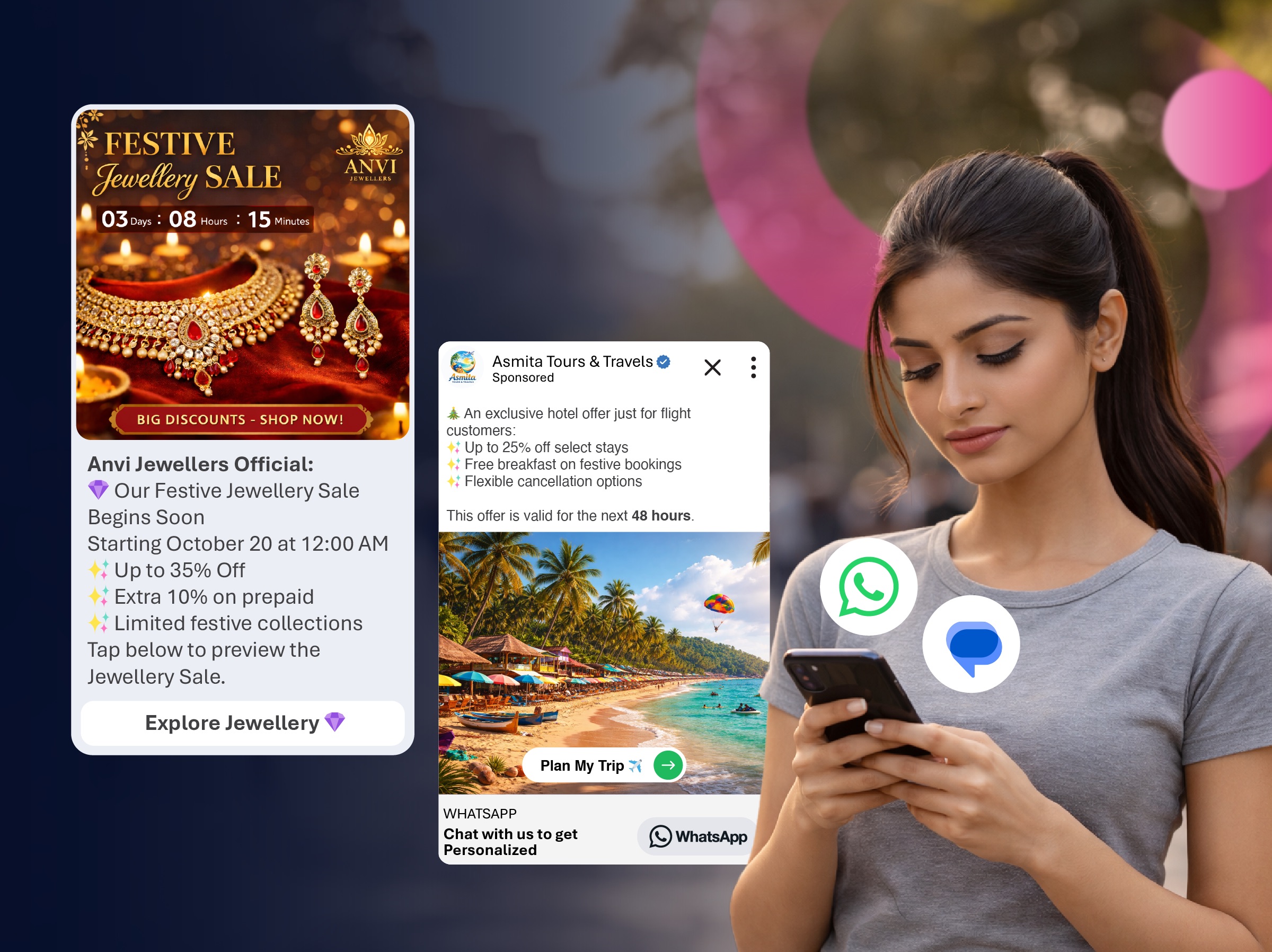
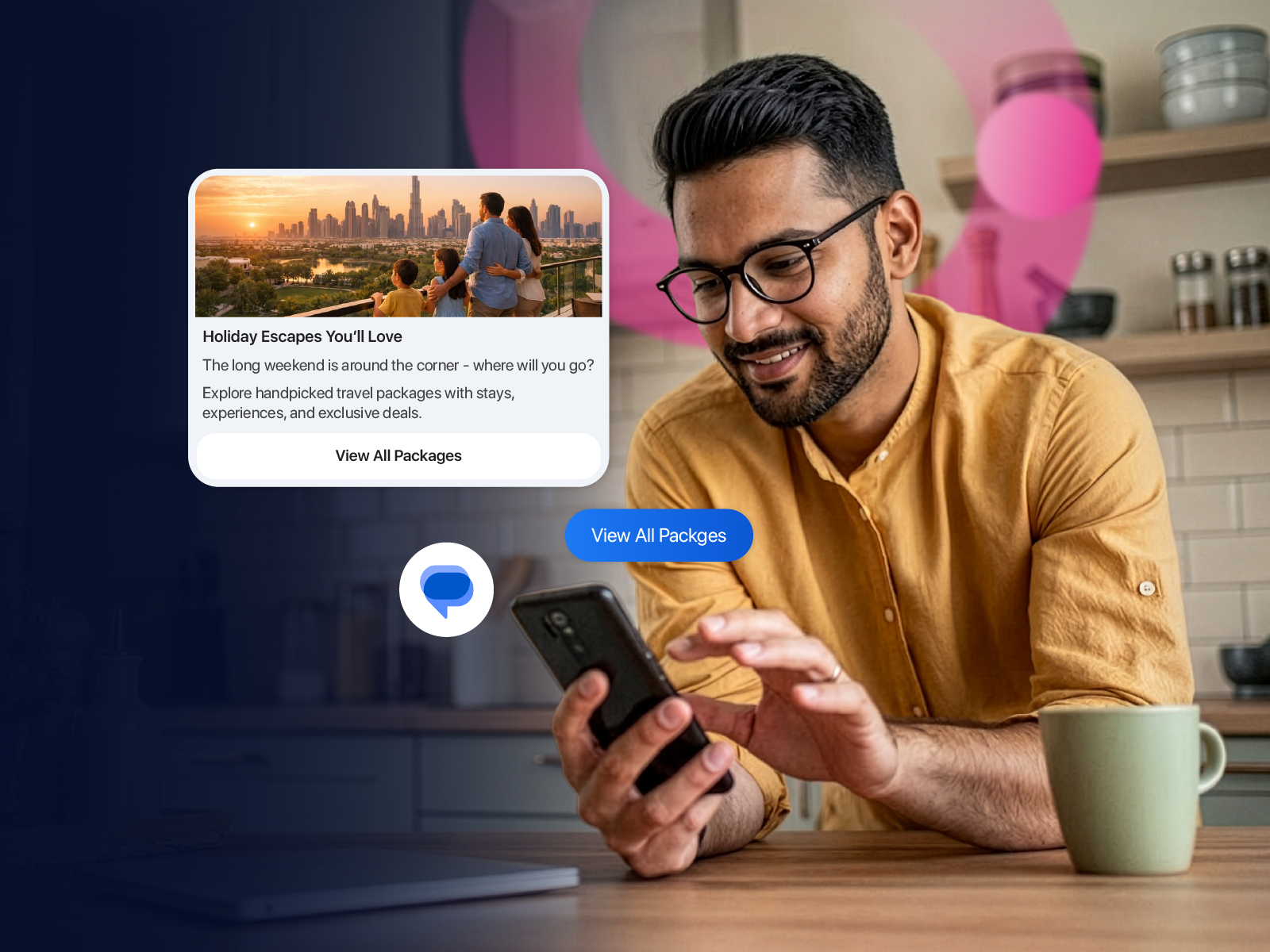
Messaging funnels replace the landing page in the post-click journey with a conversation. When users click on an ad or a CTA, they are taken to the brand's official messaging channel on WhatsApp and RCS. The entire journey then unfolds within the thread – from acquisition to consideration, conversion and beyond.
Messaging funnels eliminate friction, multiple redirections, form fills, and page loads while meeting customers in a familiar interface.
Additionally, post-click journeys on messaging channels like WhatsApp and RCS are highly customisable and AI compatible. With AI delivering hyper-personalised experiences, customer experience is elevated to a level that landing pages could never imagine.
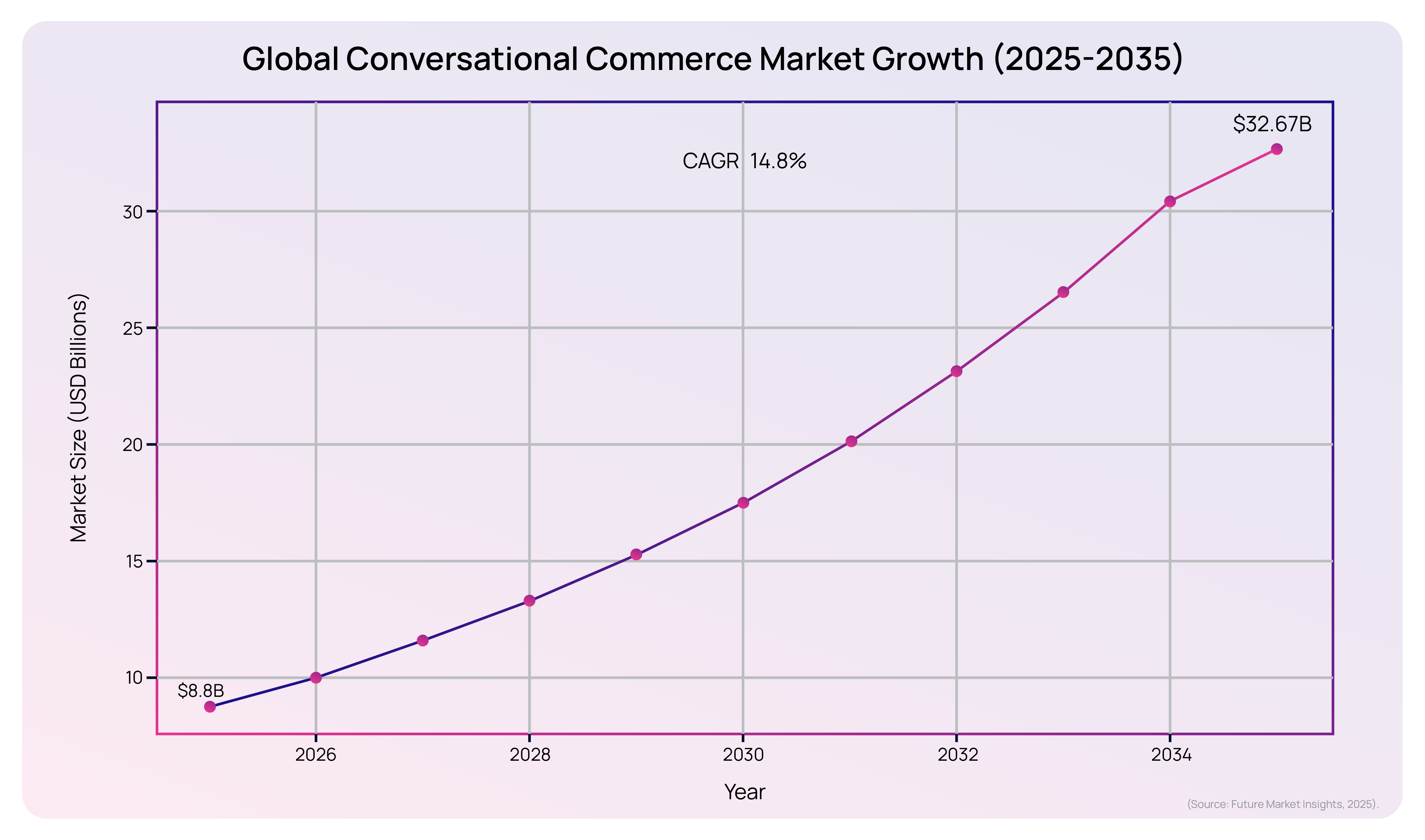
$2 billion annual run rate crossed for WhatsApp’s paid messaging by Q4 2025 (Meta CFO Susan Li)
30% CAGR predicted for the RCS for Business market from 2024 to 2030.
How Messaging Funnels Drive Higher Engagement & Conversions
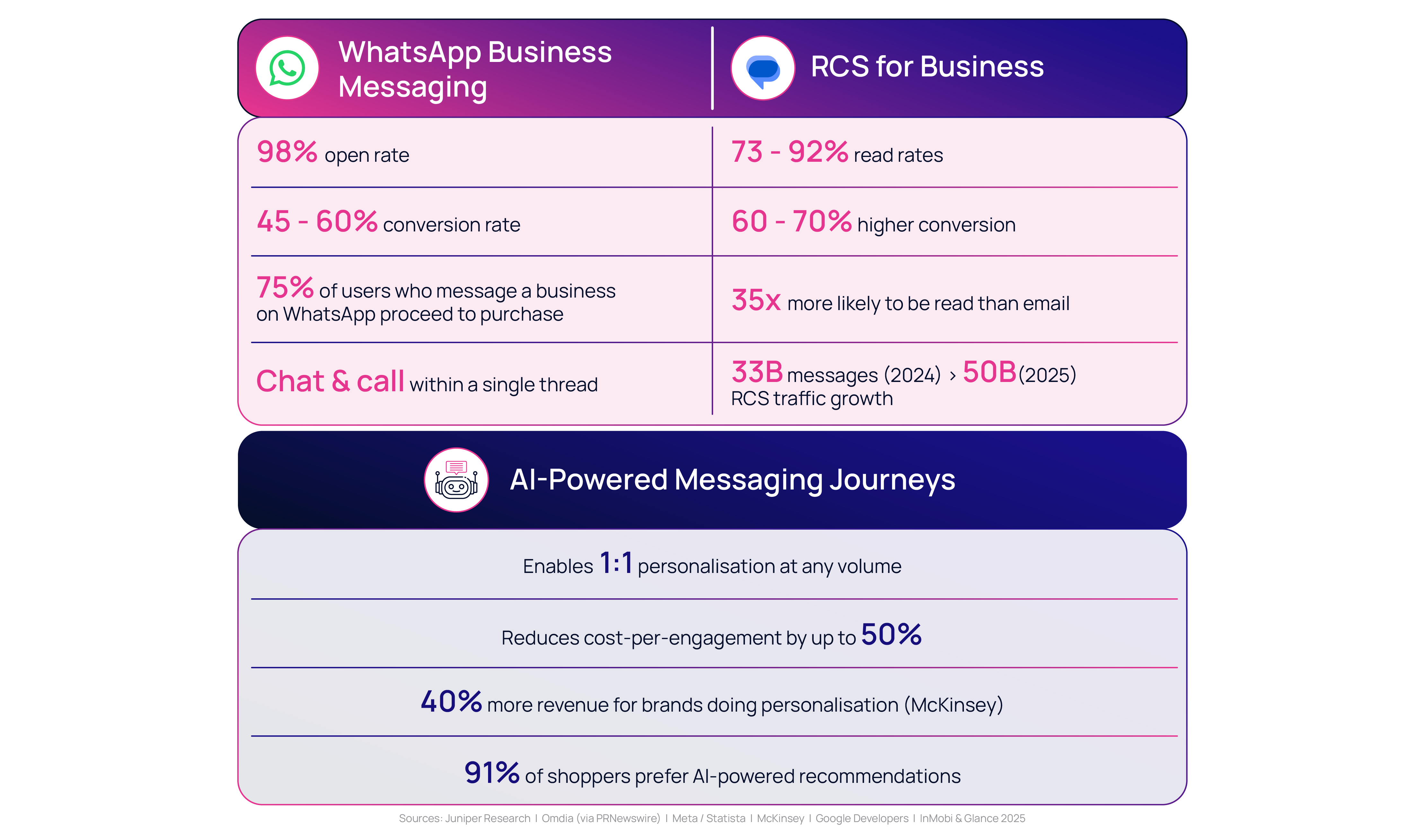
There is a glaring gap between the performance of landing pages today and messaging funnels. Across every metric, messaging funnels outperform landing pages by huge margins. And the ability of messaging channels to deliver AI-powered journeys that engage users amplifies the impact of messaging funnels over landing pages.
Compare these metrics to the average bounce rate for landing pages, which stands roughly at 45%. And with email campaigns that average ~5% click-through rate.
Listed below are some key contributors to this performance gap and the superiority of messaging funnels today:
Low friction: Messaging funnels engage customers within apps they already use – no page loads, no form fills, no multiple redirections. The journey begins as soon as they click, and every interaction is a single tap or a short, free-flowing reply. Without multiple drop-off opportunities across the funnel, messaging funnels make the path from intent to decision the shortest.
Highly accessible: WhatsApp is the most used messaging app in India. RCS comes preinstalled in the default SMS inbox on Android devices. Together, they allow brands to reach customers across varied geography, income groups, demographics, etc.
Two-way conversations that build trust: A one-to-one conversational campaign always outperforms a one-to-many broadcast campaign. Customers can raise queries, browse options, file complaints and more, making them feel heard. This two-way interaction builds organic trust that landing pages and complicated forms cannot replicate.
Real-time personalisation at scale: Every message exchanged between a brand and its customer helps them understand intent, preferences, pain points and more. Unlike landing pages that deliver the same content to the entire audience, barring basic pre-built personalisation variants based on location, age, etc., messaging funnels capture each interaction and deliver tailored responses to every customer in real-time.
Higher conversions with guided commerce: Not every customer knows what they want. Sometimes, all they need is an intelligent nudge to arrive at a decision. With two-way conversations, real-time personalisation, and leading questions, messaging funnels can guide customers to find exactly what they want in just a few clicks. With the digital equivalent of an in-store shopping assistant, customers complete purchases at a much higher rate than on landing pages or apps.
AI-powered hyper-personalisation: Unlike landing pages, which support cosmetic AI-powered personalisation only, messaging funnels leverage AI structurally. From LLM-powered intent detection and conflict management to robust recommendation engines that surface the right product at the right time, messaging funnels enable brands to deliver journeys that become more intuitive and smarter with every interaction.
Messaging channels like WhatsApp and RCS are highly AI-compatible, enabling hyper-personalised, multi-modal shopping experiences at scale. An online retailer can deliver conversational commerce journeys with Virtual Try-On to increase buyer confidence and drive quicker decision-making. A QSR or F&B brand can deliver video or deliver image-based, interactive journeys to drive engagement & increase orders during peak, high-intent moments.
AI-powered support bots or Agentic AI seamlessly resolve recurring queries, freeing human agents to focus on complex issues. Thus, reducing resolution time, strengthening trust and driving higher ROI on campaign spend.
Landing Pages Still Make Sense. But when?
This blog is not about proving that landing pages are obsolete. There are many scenarios where landing pages perform better. Simply because they were a staple a decade ago does not make them the best post-click destination across all use cases today. Landing pages aren’t dead. They’ve been wrongly used as the default conversion medium even when messaging funnels are clearly superior.
Here are some scenarios where landing pages perform better than messaging funnels:
When long-form content is critical: Landing pages indexed by search engines remain a critical acquisition channel, especially for informational queries. A messaging funnel has no organic search footprint.
When SEO and discoverability matter: When a prospective customer needs to read extensively, compare features in detail or understand a complex product, a well-designed landing page remains a powerful asset.
When the experience requires deep exploration: In heavily regulated sectors – finance, pharmaceutical communications, legal services – a documented, static page may be necessary to meet disclosure requirements.
Conclusion – The Future of Marketing is Redirection Free
So, why do messaging funnels work?
It removes the need to redirect users to another page for additional steps that web-based landing page funnels introduce at the moment of intent. And replaces it with a conversation that starts with the customer showing interest and guides them to the desired action – conversationally and within the same thread.
New-age messaging channels like WhatsApp Business Messaging and RCS for Business are increasingly becoming the channel of choice for customers. In markets where mobile is dominant, it is where high-intent customer interactions unfold – which, in 2026, means virtually every market.
And brands that will win the customer acquisition war are the ones that meet customers on the channels they already use.


.webp)



.png)
.jpeg)