

Subscribe to newsletter
Thank you! Your submission has been received!
Oops! Something went wrong while submitting the form.
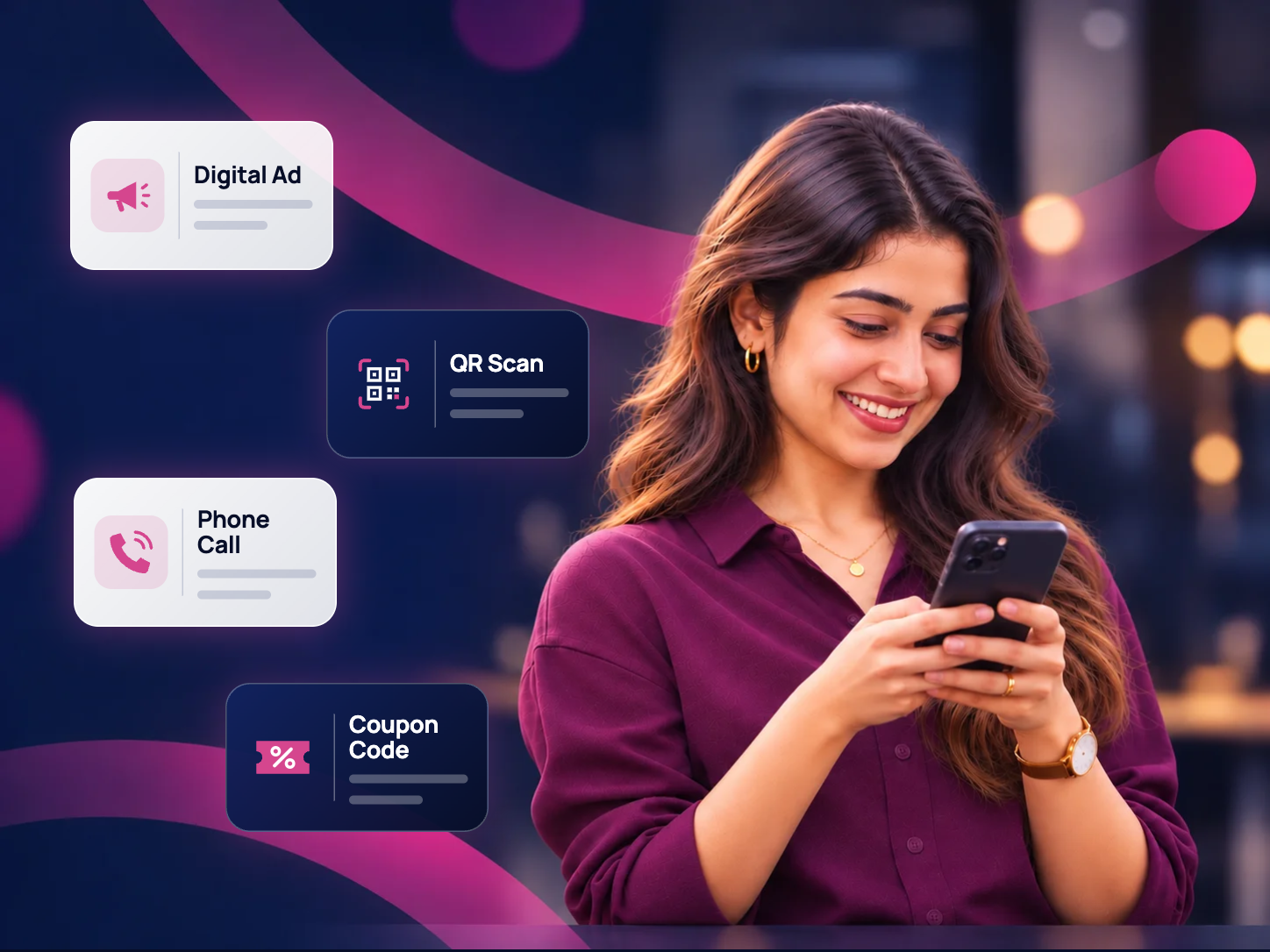
How WhatsApp and RCS connect customer interactions across online and offline journeys.
Ihina Das | Product Marketer, Karix
A marketing campaign could influence an in-store purchase without ever receiving credit for it. Consider a customer who discovers an offer for jewellery purchase on Instagram, enquires about it on WhatsApp and eventually buys the piece at the store. Each of the touch points like the ad click, the conversation and the final sale are tracked by the brand, but often looked at separately. What is the easiest way the brand can trace the sale back to the Instagram campaign that influenced it?
A 2026 Meta–Retailers Association of India report found that more than half of surveyed retail consumers research online before buying in-store, while a similar proportion research in-store before buying online.
The customer journey is connected. The data often isn't.
The attribution challenge can arise at different points in the customer journey. Brands have limited visibility into the ad campaign when the customer journey starts offline. This is happens when a digital interaction leads to an in-store purchase. The purchase is recorded in the POS system as a store transaction and the link between the revenue and campaign is generally lost.
Placement-specific QR codes in newspaper advertisements and other offline campaigns can direct customers into WhatsApp or RCS conversations while capturing the source of each response. Subsequent actions, such as coupon code redemptions, future bookings or purchases, that are linked to the information can be assessed by brands as downstream conversions, helping them attribute the sale to the campaign.
During Croma's Summer Sale, QR codes were placed inside newspaper advertisements which directly opened a chatbot on WhatsApp offering personalised coupon codes for discounts on purchases. This campaign recorded over 120,000 bot interactions.
Axis Bank used QR codes to bring customers into an RCS chatbot for product enquiries and service requests. Over 2,000 users were activated through this chatbot.
Because the next step, whether a coupon request or a service request, happens inside the conversation, both the response and what followed can be measured in one place.
The reverse is harder. A digital campaign may influence the purchase, but the transaction happens at the till.
Libas used Click-to-WhatsApp Ads to guide shoppers towards nearby stores and redeemable offers. This campaign generated 2,177 high-intent customer conversations, with an overall engagement rate of around 70%. Further, nearly 40% of users went on to explore store details.
Tanishq during its Festival of Diamonds campaign utilised targeted Facebook and Instagram ads to lead shoppers into WhatsApp conversations where they could explore the various offers and get directions to the nearest store. This campaign reported ~9,000 unique leads, ₹4.1 crore in campaign revenue and over 14x ROAS through store sales.
Libas shows intent building towards a store visit. Tanishq takes this further by reporting store-sales revenue alongside campaign engagement.
Context is extremely important when connecting a digital conversation to an in-store sale. A campaign click records a visit. A messaging conversation could also capture enquiries, customer preferences and the next steps, alongside a unique customer identifier. When that identifier is linked to CRM, loyalty or transaction records, brands can connect earlier conversations with all future purchases. The accuracy of the link then depends on the identifiers, integrations made and the customer-data permissions.
Attribution works best when it is designed before a campaign launches, not reconstructed afterwards. These three steps cover both directions:
Identify the source: Campaign-specific QR codes, tracked links, unique offers or dedicated phone numbers show where enquiries originate. This is what makes offline-to-online journeys measurable.
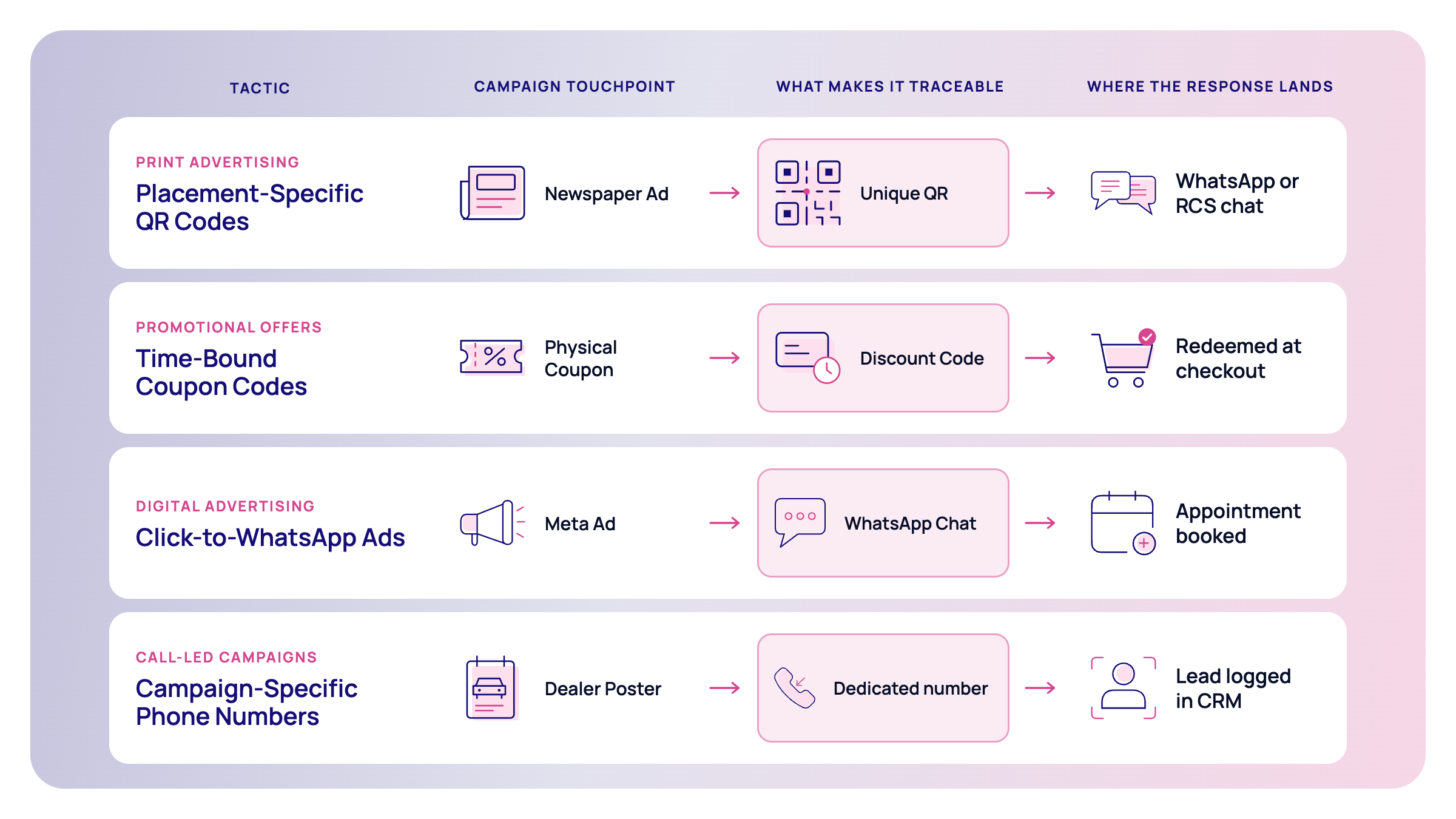
Track meaningful actions: WhatsApp and RCS can capture product enquiries, store searches, offer requests and service interactions. Interactive buttons and suggested replies give clear and structured replies.
Connect completed transactions: This is what completes the loop in online-to-offline journeys. For example, a retailer who offers in-store appointments via Click-to-WhatsApp Ads could track the booking reference against the completed purchase, leading to quick attribution of the campaign with the final sale. POS integrations along with CRM systems can support this where appropriate identifiers and systems exist.
Brands should also agree on attribution windows and permitted data use a priori. Attributed revenue is not the same as incremental revenue. A controlled experiment can help establish whether a campaign generated additional or net-new sales.
Karix helps businesses extend visibility into customer journeys beyond the first touchpoint and gain insights during customer engagements and conversations across WhatsApp and RCS.
Using Ads2Chat, brands can track customer activity across WhatsApp, websites and apps. With this, brands can also define their own conversion goals and integrate with Meta's Conversions API to help optimise campaign performance.
RCS also collects funnel analytics for delivery, reads, clicks and conversions. By integrating these conversational insights with CRM and analytics systems, businesses can measure downstream conversions and revenue, and understand the impact of their campaigns on customer journeys.
Customers already move between online and offline. Your measurement should follow.
Looking to improve visibility across your customer journeys? Write to us at marketing@karix.com.

a Tanla company is a strategic growth partner to enterprises, enabling meaningful, secure, and scalable customer engagements across the most trusted and emerging communication channels. With a future-forward mindset, agile execution, and a 25+ year legacy of innovation, we drive outcomes — not just outputs.